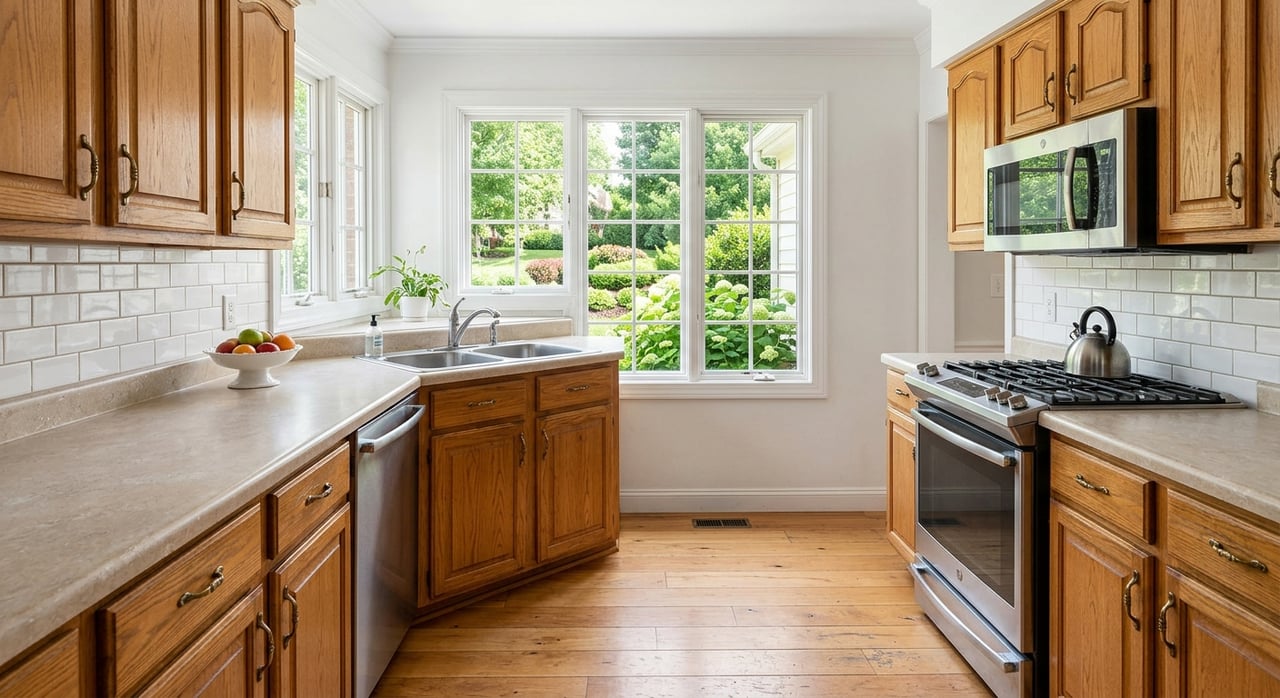
Holliston Homeowners: Renovate Before Selling Or List As-Is?
April 2, 2026
April 2, 2026
Wondering whether to renovate before selling or simply list your Holliston home as-is? You are not alone. In a town with older housing stock and a market where buyers still pay close attention to condition, that choice can have a real impact on price, timing, and stress level. The good news is that you usually do not need to guess. With the right plan, you can decide where improvements make sense, where they do not, and how to avoid overspending before you list. Let’s dive in.
Holliston’s housing profile makes this decision especially important. According to U.S. Census QuickFacts, the town has a high owner-occupied rate of 87.4%, and the median owner-occupied home value is $650,300. That points to a market shaped largely by owner-occupant buyers rather than investors looking for deep-discount fixer-uppers.
The age of the housing stock also matters. Holliston’s housing production plan says 38% of structures were built from 1960 to 1979, and 35% were built in 1959 or earlier. In practical terms, many sellers are weighing whether to refresh dated finishes, address deferred maintenance, or let the next owner take on bigger updates.
Current market conditions support a thoughtful middle ground. Redfin market data shows Holliston as a very competitive market, with a February 2026 median sale price of $642,500, 65 days on market, and a 97.9% sale-to-list ratio. Inventory is relatively limited, but buyers are still selective, which means condition and presentation can still shape your outcome.
For many Holliston homeowners, the best answer is neither a full remodel nor a hands-off as-is sale. A targeted pre-sale update plan often makes the most sense.
That usually means you fix safety issues and known maintenance concerns first. Then, if your budget allows, you focus on visible, broadly appealing improvements that help the home feel well cared for and move-in ready.
This approach lines up with both local housing realities and regional resale data. It is often the most practical way to protect your equity without putting too much money into projects that may not come back at closing.
Renovating before listing can be a smart move if your home is fundamentally sound but looks tired or dated. If the main issue is cosmetic wear rather than major systems failure, modest updates can help buyers see the home’s value more quickly.
This is especially true in Holliston, where many homes are older and buyers may compare your property against other homes that already feel more current. In a selective market, small visual improvements can make your home easier to picture living in and easier to justify at your asking price.
The strongest near-term resale projects tend to be modest and visible. According to the 2025 New England Cost vs. Value report, some of the top-performing projects include:
These projects outperformed large discretionary renovations in resale recovery. That does not mean every seller should do all of them, but it does suggest that curb appeal and functional cosmetic updates often offer more practical value than major custom remodels.
The same regional data shows a sharp drop in return for larger projects. A major midrange kitchen remodel recouped 47.2% of cost, while an upscale bath remodel recouped 38.8%, according to the same JLC report.
That gap matters if you are selling soon. A large renovation may make the home nicer for you, but it may not make financial sense if your goal is near-term resale. Buyers tend to reward clean, functional, well-presented homes more than highly personalized luxury upgrades.
Listing as-is can be the better strategy when your home needs major work that is unlikely to pay off before sale. If the property would require a full kitchen replacement, multiple bath remodels, or expensive system upgrades, spending heavily before listing may not improve your bottom line.
This is where discipline matters. It is easy to start with one repair and end up in a long, expensive pre-sale project. If your home needs more than a modest refresh, pricing realistically and selling as-is may be more efficient.
You may want to list as-is if:
As-is does not have to mean neglected or poorly presented. You can still clean thoroughly, improve basic curb appeal, and disclose known issues clearly. In many cases, that combination is more effective than pouring money into a project that buyers may want to redo anyway.
If you do update, focus on function as much as looks. Buyer preference research from the National Association of Home Builders shows that buyers place high value on practical kitchen and bath features.
In kitchens, buyers responded well to features like walk-in pantries, table space for eating, double sinks, water filtration, pull-out shelves, central islands, and stone countertops. In bathrooms, they favored layouts and storage that feel useful day to day, such as a shower and tub in the primary bath and linen storage.
For a seller, the takeaway is simple. You do not need to create a luxury showpiece. You need to help the home feel functional, current, and easy to live in.
If you are unsure whether to renovate or sell as-is, a pre-listing inspection is often the best first step. In Massachusetts, listing a home as-is does not remove the buyer’s inspection rights.
According to Mass.gov’s home inspection guidance, sellers and agents must provide a separate written disclosure affirming the buyer’s right to a home inspection before or at the signing of the first purchase contract. Buyers may waive that inspection only after proper disclosure and without coercion or inducement.
That means hidden issues can still come back during negotiations. A pre-listing inspection helps you identify what is cosmetic, what is a true deal risk, and what may be better handled through repair, disclosure, or pricing strategy.
For many Holliston homes, especially older ones, the paperwork can go beyond inspection disclosure. Massachusetts also provides commonly used residential disclosure forms, including lead-paint disclosure materials for homes built before 1978.
If your home falls into that category, advance planning becomes even more valuable. A pre-listing inspection can help you organize decisions before the property hits the market, rather than reacting under pressure once an offer is in hand.
If you are trying to decide which path fits your home, this quick framework can help.
In Holliston, the most practical strategy is often a hybrid one. You address safety concerns and major maintenance issues first, then invest selectively in the parts of the home buyers see first.
That approach fits the town’s older housing stock, a market with limited inventory but selective buyers, and regional data showing stronger resale value for modest, visible improvements. It also helps you avoid the common mistake of over-renovating right before a sale.
If you want a calm, methodical plan for your Holliston home, Lynne Detarando Grden can help you assess condition, market positioning, and which updates are actually worth considering before you list.
Lynne brings the precision of an engineer to your real estate journey. With a background in Civil and Environmental Engineering, she offers a unique, analytical approach to the market that ensures no detail is overlooked. Contact her for a strategic partner who builds success from the ground up.

Lynne Detarando Grden
69 Milk St Ste 116 Westborough MA 01581